Industrial Automation Cable & Harness Solutions Built to Keep Lines Running
Custom cable assemblies, wiring harnesses, and connector solutions for robots, servo systems, sensors, PLCs, control cabinets, and automated equipment — engineered around your machine, your duty cycle, and your environment so connections stay stable from prototype to mass production.
Where Our Cable Solutions Work in Your Automation System
Every automated line is a network of moving, sensing, and switching parts — each one needing the right cable to stay reliable. We design and manufacture connection assemblies for the six core nodes of an industrial automation system, so you can source the entire wiring set from one engineering-led partner instead of stitching together vendors.
 Node 01
Robot Arm Cables
High-flex cable structures rated for millions of bend cycles, routed through joint paths so signal and power stay stable across every axis of motion.
View Robot Solutions Node 02
Servo Motor Cables
Separated power and encoder lines with proper shielding and terminal selection, so torque commands reach the drive cleanly and motion control stays accurate.
View Servo Solutions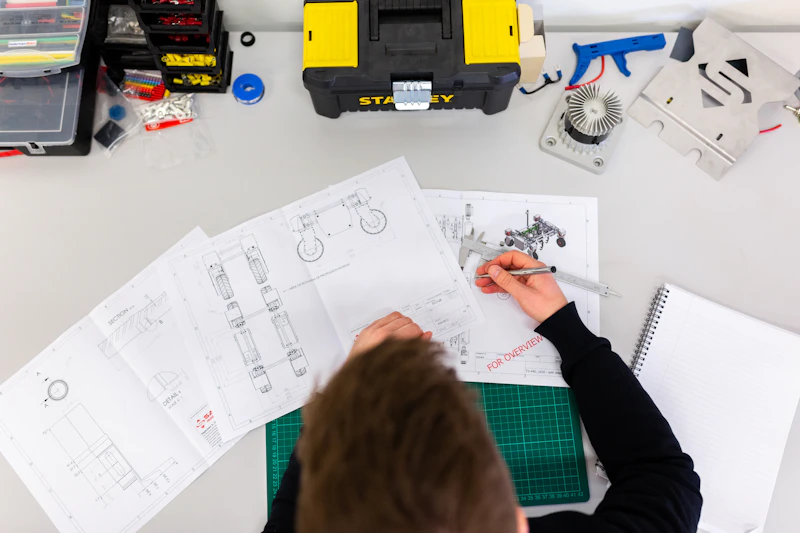 Node 03
Sensor Cables
Precision-built small-gauge assemblies with miniature connectors and shielding, so weak sensor signals reach the controller without drop-out or interference.
View Sensor Solutions Node 04
I/O Module Cables
Pre-terminated, color-coded assemblies for PLC and I/O modules, cutting installation time and removing wiring errors at machine build and on-site commissioning.
View I/O Solutions Node 05
Control Cabinet Harnesses
Organized, labeled harness layouts built to drawing, so panel builders close the cabinet faster and field service teams trace any circuit without unwrapping looms.
View Cabinet Solutions Node 06
Power & Signal Harnesses
Combined power and signal looms with insulation and routing matched to your conveyor or packaging machine, so one harness replaces several point-to-point cables.
View Harness SolutionsIn an Automated Line, a Small Cable Failure Can Stop the Whole System
Every minute of unplanned downtime costs more than the cable that caused it. We help reduce six common connection-side risks at the design stage — before they reach the production floor.
Signal Interruption
Unshielded or misrouted signal lines pick up EMI from drives and motors, causing intermittent sensor or feedback errors that halt the cycle without a clear fault code.
Cable Fatigue
Standard cables crack and break inside cable carriers and robot dress packs after thousands of bend cycles, leading to recurring breakdowns long after warranty.
Poor Contact
Wrong terminal type, weak crimp force, or mismatched connectors create high-resistance joints that overheat under load and drop signals during peak production.
Wrong Wire Gauge
Under-rated conductors run hot, drop voltage to the drive, and trip protection devices — forcing line stops that look like controller faults but are really wiring issues.
Unstable Assembly
Inconsistent crimping, mixed batches, and undocumented changes between samples and production cause "good prototype, bad batch" failures that are hard to isolate.
Delayed Spare Parts
Custom assemblies sourced from slow or inconsistent suppliers leave maintenance teams waiting weeks for replacements, turning a small fault into a long line stop.
Cable & Harness Solutions, Sorted by Your Machine
Procurement teams and engineers usually start from "what machine am I building" rather than "what cable do I need". Pick your equipment type below and see the cable, harness, and connector approach we use for it — so you can match our capability to your project in seconds.

Robots & Cobots
Built for arms and cobots that move millions of cycles a year — keeping motion, power, and feedback signals stable inside the dress pack.
- High-flex cable construction engineered for repeated routing through joints and continuous-bend dress packs.
- Compact harness layout that fits the limited internal space of robot arms and collaborative platforms.
- Reliable connector selection matched to your robot brand, so commissioning and maintenance stay simple.

Servo & Motor Systems
Separated power and feedback paths designed around your drive, so torque commands and encoder signals arrive cleanly and motion control stays accurate.
- Separated power and signal pairs with proper shielding to keep drive noise out of encoder feedback.
- Stable transmission through shielding and conductor sizing matched to your drive's current and frequency.
- Durable terminals and overmolded ends that hold up to vibration, heat, and frequent maintenance access.
Sensors & I/O Modules
Small-gauge precision cables and miniature connectors that protect weak sensor signals from line noise and keep your I/O readings consistent.
- Precise signal cables sized for low-current sensors, so weak signals reach the controller without distortion.
- Miniature M5, M8, and M12 connectors that fit tight sensor housings without sacrificing IP rating.
- Clean assembly with consistent strip, crimp, and labeling — so panel build and field debug both stay fast.

Control Cabinets
Pre-built, pre-labeled harness sets that drop into your cabinet — so panel builders spend less time stripping and crimping, and more time shipping.
- Organized wiring harnesses built to your cabinet drawing, with cable lengths cut and routed for the actual layout.
- Clear labeling and color coding on every conductor, so technicians wire and troubleshoot without guesswork.
- Easy installation thanks to pre-assembled terminal blocks, ferrules, and connector ends ready to plug in.

Conveyors & Packaging Machines
Wear-resistant cables and replaceable harness sets that survive moving belts, frequent washdowns, and constant mechanical contact on packaging lines.
- Wear-resistant jacket materials built for abrasion against frames, guards, and moving belts.
- Quick replacement design with modular connector ends, so a damaged section swaps out without rewiring the line.
- Stable supply on repeat orders, so maintenance and OEM teams can plan spares without long lead surprises.
Built Around Your Working Environment
Tell us how the cable will live — how often it moves, what fluids touch it, what noise surrounds it, what space it routes through — and we translate each working condition into a specific cable construction, jacket, and shielding choice.
Repeated Movement & Bending
For dress packs, cable carriers, and robot joints where the cable bends millions of times across the machine's life.
Electrical Noise & EMI
For sensor, encoder, and data lines running near drives, motors, and switching power that radiate electrical noise.
Cutting Fluids & Lubricants
For machine tools, automotive cells, and packaging zones where cables sit in lubricant mist or contact cutting fluids.
Mechanical Rubbing & Wear
For cables that drag across frames, belts, guards, or sharp edges where standard jackets quickly cut through.
Tight Spaces & Bend Radius
For inside-machine routing where the cable must navigate small radii, tight slots, or crowded brackets without strain.
Washdown & Wet Areas
For machines in food, beverage, or outdoor automation where the cable sees regular washdown, splash, or humidity.
From Machine Design to Cable Assembly
Sampling without review costs weeks. Our engineering team reviews your drawing, machine layout, and electrical requirements before we cut the first wire — so the first sample lands closer to mass-production-ready, and your project moves forward instead of looping.

Share your drawing — we'll review it before quoting.
Send your drawing, machine layout, current rating, signal type, connector requirement, and working environment. Our engineering team reviews cable routing, connector matching, material selection, and assembly feasibility before sampling — so issues surface on paper, not on the production floor.
- Cable routing review against your machine layout and bend radius limits
- Connector matching to your existing brand, pin count, and mating side
- Material selection aligned with your environment, current, and certifications
- Assembly feasibility flagged before tooling and sampling are committed
One Project, Three Cable Families — Integrated Cleanly
Most automation projects need power, signal, and control cabling at once. Sourcing them as three orders from three vendors creates routing conflicts, mismatched terminations, and assembly headaches. We integrate all three families into a single manufacturable wiring solution.
Power Transmission
For circuits that carry the current — sized, shielded, and terminated to handle continuous load without voltage drop or heat build-up.
-
Motor Power CablesConductor sizing matched to drive output, so motors receive clean torque without overheating the line.
-
Cabinet Power HarnessesBus-bar to terminal harness sets, pre-built so panel builders skip on-site cutting and crimping.
-
Grounding CablesProperly bonded ground paths that protect drives, sensors, and operators across the whole machine.
Signal Transmission
For lines that carry information — built with proper shielding and conductor pairing so weak signals reach the controller without drop-out.
-
Sensor CablesLow-noise small-gauge assemblies for proximity, photoelectric, and inductive sensors across the line.
-
Shielded CablesFoil-plus-braid shielding with proper drain termination, keeping drive noise out of feedback paths.
-
Data CablesTwisted-pair fieldbus assemblies for Ethernet/IP, PROFINET, EtherCAT, and other industrial protocols.
Control Connection
For everything that ties the system together — PLC harnesses, I/O cables, and terminal assemblies built to your wiring schedule.
-
PLC HarnessesPre-terminated PLC-side looms with ferrules and labels, ready to land on the controller terminal block.
-
I/O Module CablesColor-coded I/O assemblies that cut commissioning time and remove wiring errors on the floor.
-
Custom Terminal AssembliesBranded terminal-block sets built to your schedule, so field service teams trace any circuit cleanly.
Consistent Quality from Prototype to Production
"The sample worked, but the batch failed" is the most common complaint OEMs have about cable suppliers. We control every stage from raw materials to finished assemblies — and document each batch — so the cable on machine #500 matches the one on machine #1.
 PROCESS
Crimping & Pull-Force Records
Each crimp tool runs to a calibrated force curve, with sampling pull-tests logged by shift. Settings carry forward across batches, so the joint that passed sampling is the same joint built at scale.
 TEST
TEST
100% Continuity & Final Test
Every assembly runs through electrical continuity and pin-map verification before packing — catching wiring errors at our floor instead of yours, and protecting your line build schedule.
 TRACE
TRACE
Batch Labels & Inspection Reports
Every shipment carries a lot label tied to material, operator, and test records. If a question comes up six months later, we can trace it back — so warranty conversations stay short and factual.
Real Automation Projects We've Wired
Names stay confidential — engineering details don't. Three project snapshots showing how we approach robot, packaging, and sensor cabling challenges from spec to shipment.
Case 01
Robotic Arm Project
Case 02
Packaging Machine OEM
Case 03
Sensor System Integrator
Have a project that doesn't fit a standard catalog? Tell us about it — we'll likely have done something close.
Share Your Project →Send Your Drawing — We'll Reply with Engineering Feedback
Skip the long sales chain. The fields below land directly with our engineering team, so the first reply you get is a technical review of your cable solution — not a generic quote.
- Engineering reply within 48 hours on business days
- Drawings and project information kept confidential under NDA on request
- Only email is required — fill in what you have, leave the rest blank